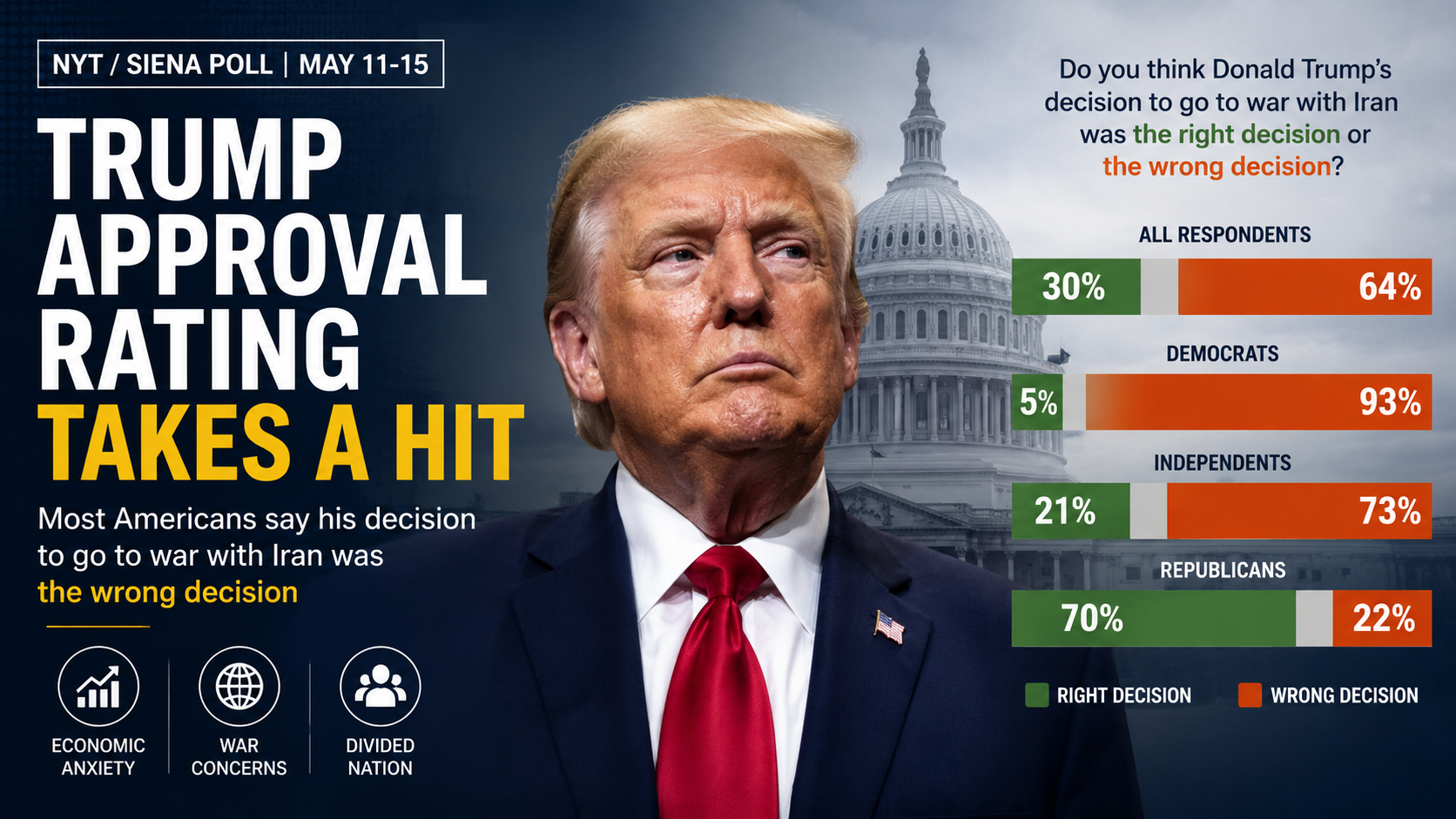
Former U.S. President Donald Trump is once again facing intense scrutiny after a new New York Times/Siena College poll showed signs of declining public approval, particularly over economic concerns and growing dissatisfaction surrounding foreign policy issues.
The latest survey, which quickly became one of the most discussed political topics online, suggests that Trump’s approval rating has fallen amid rising public anxiety over inflation, uncertainty in the economy, and debates surrounding America’s international role. The poll has sparked major discussion across social media platforms and U.S. news networks, especially because it comes during a politically sensitive period ahead of the 2028 presidential race.
What the New Poll Says
According to the New York Times/Siena poll, a growing number of voters expressed dissatisfaction with Trump’s handling of key national issues, including:
- the economy,
- inflation,
- foreign policy,
- and political division.
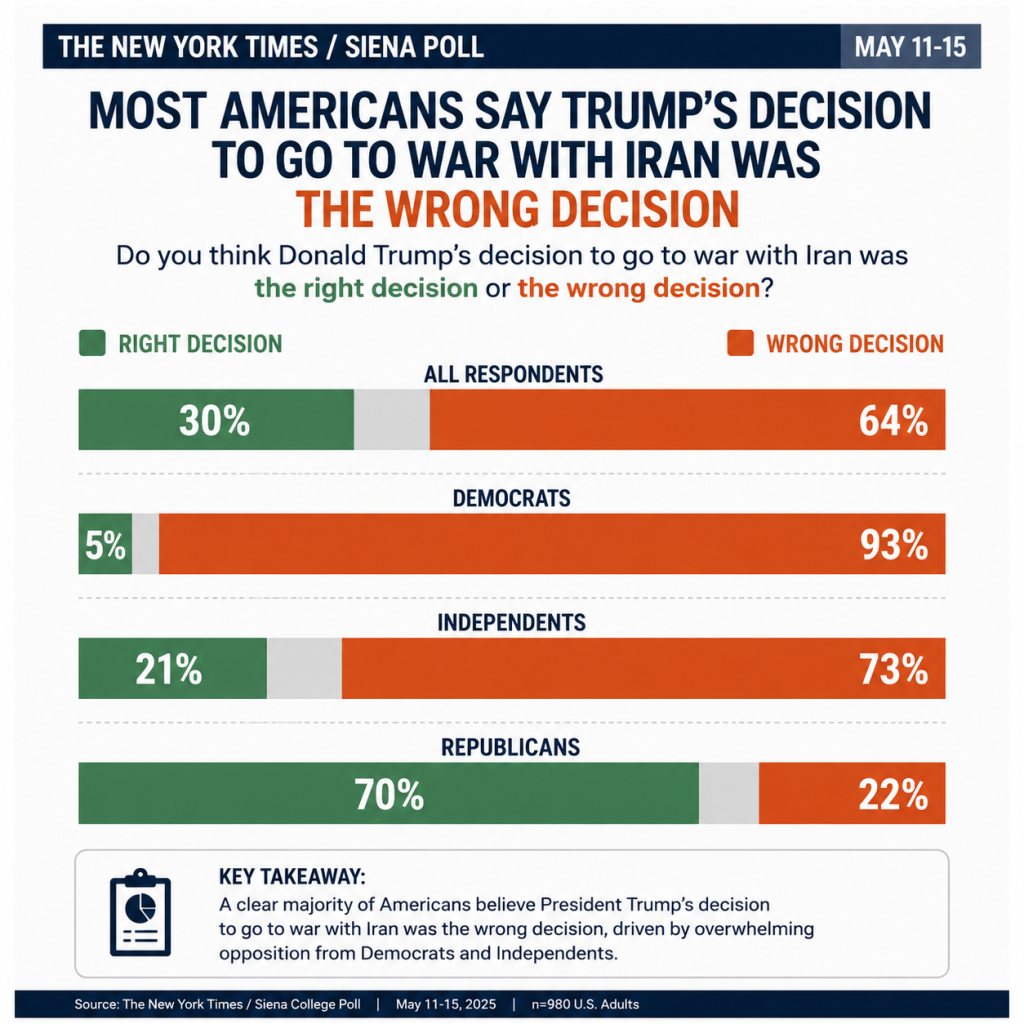
The poll indicated that while Trump continues to maintain strong support among his core Republican voter base, independent voters and suburban moderates appear increasingly divided over his leadership approach.
One of the biggest warning signs for Republicans is the decline in economic confidence among ordinary voters. For years, Trump’s strongest political advantage has been public perception around economic management. However, recent polling suggests that rising costs, financial uncertainty, and fears of economic slowdown are beginning to affect that image.
Economic Concerns Driving the Decline
Economic anxiety appears to be one of the central reasons behind the shift in Trump approval ratings.
Across the United States, many households continue to struggle with:
- high living costs,
- housing affordability issues,
- expensive healthcare,
- and inflation-related pressure.
Even though unemployment numbers remain relatively stable, voter sentiment often depends more on daily financial stress than broader economic indicators.
The New York Times poll reportedly found that many Americans feel uncertain about the direction of the economy despite political claims of economic recovery.
That frustration is increasingly visible online, where discussions about:
- grocery prices,
- rent,
- fuel costs,
- and job insecurity
continue dominating political conversations.
Foreign Policy and War Fatigue
Another major factor affecting Trump’s approval ratings appears to be public exhaustion over global conflicts and America’s international involvement.
The poll comes at a time when debates surrounding:
- Ukraine,
- NATO,
- Middle East tensions,
- and U.S. military spending
have intensified sharply.
A section of voters reportedly believes that political leaders in Washington are becoming too focused on international conflicts while ordinary Americans continue struggling economically at home.
Political analysts say “war fatigue” is becoming a significant issue among independent voters, especially younger Americans who are increasingly skeptical of large-scale foreign interventions.
Trump has attempted to position himself as a leader focused on “America First” policies, but critics argue that political instability and aggressive rhetoric continue contributing to public uncertainty.
Why the Poll Is Trending Online
The phrase “Trump approval rating” began trending heavily after multiple media outlets highlighted sections of the poll showing weakening support among swing voters.
Several political commentators described the numbers as one of the clearest signs yet that Trump’s political dominance may be facing new challenges ahead of future elections.
Social media platforms quickly became flooded with:
- reactions,
- political memes,
- campaign criticism,
- and debates over whether the polling accurately reflects national sentiment.
Supporters of Trump dismissed the poll as biased and argued that mainstream media organizations have historically underestimated his support base. Many conservatives pointed out that Trump has survived negative polling cycles before and still managed to outperform expectations electorally.
Meanwhile, critics of Trump claimed the numbers reflect growing voter exhaustion with political polarization and constant controversy.
Republicans Still Deeply Divided
Despite the headlines surrounding declining approval numbers, Trump remains the most influential figure inside the Republican Party.
Most Republican primary voters still strongly support him, and many conservative leaders continue aligning themselves closely with his political movement.
However, behind the scenes, some Republican strategists are reportedly concerned about whether Trump can maintain enough support among moderate and independent voters to remain electorally dominant in the long term.
Polls in recent years have repeatedly shown a major divide between:
- core Republican voters,
- independent swing voters,
- and younger suburban voters.
That divide could become increasingly important in future national elections.
The Media Battle Around Polling
Trump and his allies have long attacked mainstream polling organizations and media outlets, arguing that many polls are designed to shape political narratives rather than simply measure public opinion.
Following the release of the latest poll, several pro-Trump commentators accused major media organizations of amplifying negative polling selectively while ignoring surveys that show stronger Republican support.
At the same time, political analysts caution that individual polls should not be viewed in isolation. Approval ratings often fluctuate significantly depending on:
- economic conditions,
- global events,
- media coverage,
- and campaign cycles.
Still, large national polls like the New York Times/Siena survey remain influential because they help shape public discussion and political momentum.
Could the Numbers Change Again?
American politics has repeatedly shown that public opinion can shift very quickly.
Trump himself has experienced:
- major polling declines,
- dramatic political comebacks,
- impeachment battles,
- criminal investigations,
- and multiple election controversies
while continuing to dominate national political conversation.
Supporters argue that his political brand remains uniquely resilient because of his direct connection with voters who distrust mainstream institutions.
Critics, however, believe repeated controversies, economic frustration, and political fatigue are gradually weakening that connection among broader sections of the electorate.
The Bigger Political Picture
The growing focus on Trump approval ratings reflects something larger happening in American politics.
Voters across the political spectrum are increasingly frustrated with:
- economic instability,
- political polarization,
- rising global tensions,
- and declining trust in institutions.
The latest poll may not define the future of U.S. politics on its own, but it does reveal a country still deeply divided over Donald Trump’s leadership and political legacy.
With future election battles already beginning to take shape, approval ratings will continue playing a major role in shaping media narratives, campaign strategies, and public perception.
For now, one thing remains clear:
Donald Trump continues to dominate American political conversation — whether his approval numbers are rising or falling.