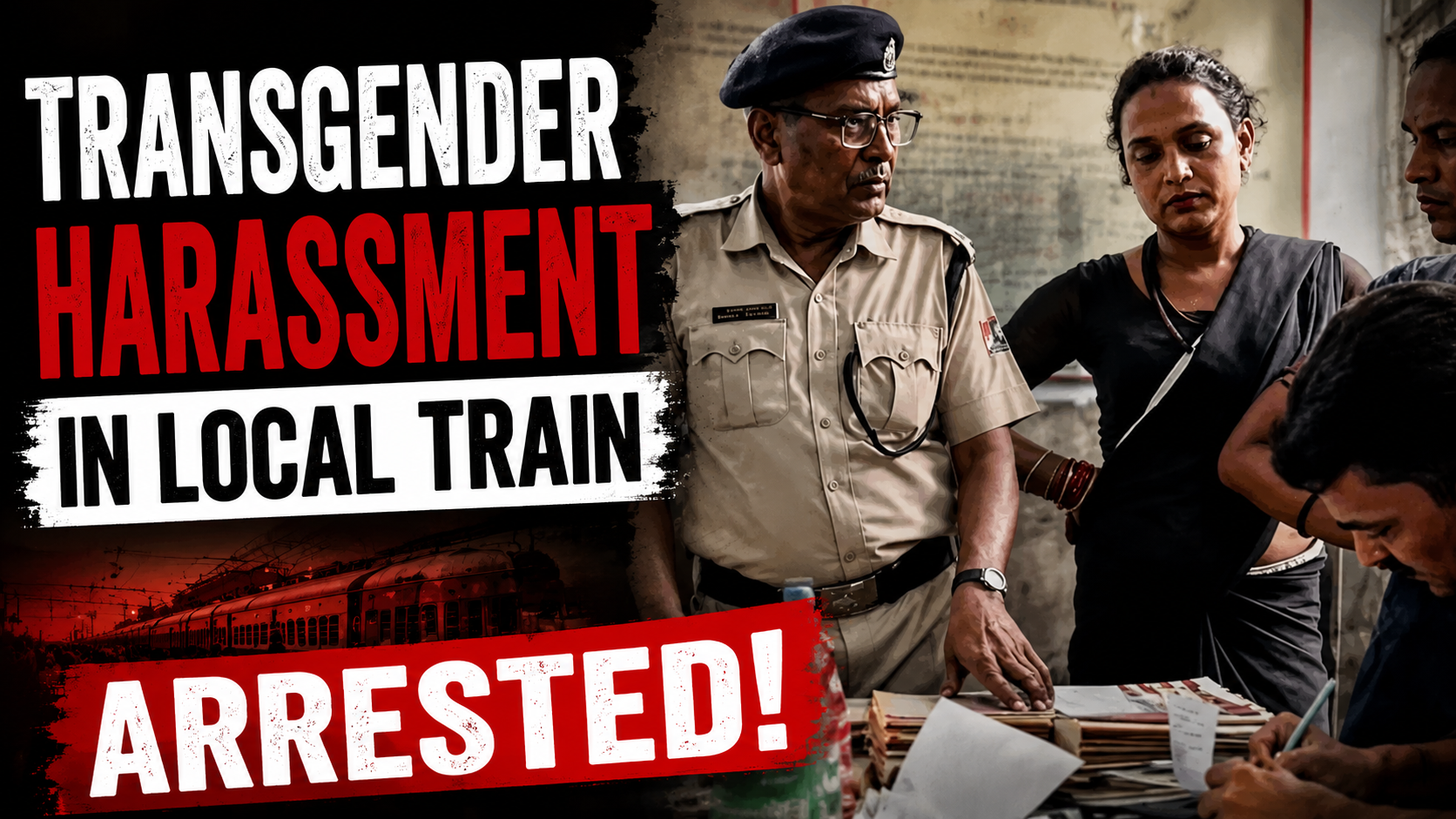
A viral social media post by an advocate from West Bengal has sparked widespread debate after he alleged that he was harassed inside a local train by members of a transgender group for refusing to pay money.
Viral Train Incident Sparks Debate Over Aggressive Money Collection by Some Transgender Groups in Public Transport
The incident, reportedly linked to a train route near Shantipur Junction, has once again brought public attention to long-standing complaints involving aggressive money collection by some transgender individuals in trains and other public spaces across India.
The controversy escalated after the advocate uploaded a detailed Facebook post along with a video describing the incident. The post quickly went viral, eventually drawing a public response from the Ministry of Railways.
According to the advocate’s latest comments on social media, both accused individuals have now reportedly been arrested by the Railway Protection Force (RPF).
What the Advocate Alleged
In his viral statement, the advocate claimed that a group entered the local train and began demanding money from passengers.
According to his account, the situation escalated after he refused to pay.
He alleged that:
- he was verbally abused,
- publicly humiliated,
- threatened,
- and physically harassed in front of other passengers.
The advocate further claimed that the confrontation continued even after the train stopped at the station. He alleged that attempts were made to intimidate him and prevent him from protesting the incident.
He later uploaded a video online describing the entire episode, which rapidly spread across Bengali social media circles.
The post triggered strong public reactions, with many users sharing similar experiences involving aggressive money collection inside trains and public transport systems.
Railway Ministry Responds Publicly
As the video gained traction online, the Ministry of Railways officially responded in the comment section of the advocate’s post.
The ministry requested:
- journey details,
- PNR or UTS information,
- and mobile contact details
while also advising the complainant to file the matter through official railway grievance systems and helpline channels.
The public response from the Railway Ministry significantly increased attention surrounding the incident.
Later, the advocate replied in the comment thread stating that:
“Complaint lodged, arrested both by RPF.”
However, detailed official information regarding the exact charges or legal proceedings has not yet been publicly released.
A Common Complaint in Local Trains and Public Spaces
The incident has reignited public discussion over aggressive money collection practices allegedly carried out by some transgender groups in:
- suburban trains,
- buses,
- railway stations,
- traffic signals,
- marketplaces,
- and public transport hubs.
Many passengers claim that while some interactions remain voluntary or ceremonial in nature, there are also instances where passengers allegedly face:
- intimidation,
- verbal abuse,
- public embarrassment,
- or unwanted touching
if they refuse to pay money.
Such complaints are especially common in crowded suburban railway systems where enforcement becomes difficult.
Why the Issue Remains Socially Sensitive
The issue is socially sensitive because it directly involves the transgender community, which has historically faced:
- discrimination,
- social exclusion,
- unemployment,
- and economic marginalization.
Many activists argue that lack of employment opportunities forces sections of the transgender community into informal methods of earning income, including public collection practices.
At the same time, critics argue that economic hardship cannot justify harassment or intimidation of passengers in public spaces.
This creates a difficult public debate balancing:
- dignity and rights of transgender individuals,
- public safety,
- passenger rights,
- and law enforcement concerns.
Social Media Users Share Similar Experiences
After the advocate’s video went viral, several social media users began posting their own experiences from:
- Kolkata local trains,
- long-distance trains,
- metro stations,
- and buses.
Some passengers alleged they often feel pressured into giving money simply to avoid confrontation or public humiliation.
Others claimed that women, students, and elderly passengers frequently feel uncomfortable during such encounters but hesitate to speak publicly about them.
The incident therefore evolved beyond a single viral video and became part of a larger conversation around safety and harassment in public transport systems.
Railway Security and Enforcement Challenges
Railway authorities and the Railway Protection Force occasionally conduct drives against:
- unauthorized solicitation,
- extortion,
- and passenger harassment.
However, enforcement remains inconsistent due to:
- overcrowded railway systems,
- manpower limitations,
- and the socially sensitive nature of such incidents.
The latest viral case appears to have prompted quicker action because of the large public attention it received online.
Social Media Increasingly Driving Public Action
The controversy also highlights how social media platforms are increasingly influencing administrative response in India.
In many recent cases:
- viral videos,
- online complaints,
- and public outrage
have forced quicker reactions from authorities.
The Railway Ministry’s public response to the advocate’s complaint demonstrated how government departments are now actively monitoring viral public grievances online.
However, critics argue that many similar incidents only receive serious attention after becoming social media controversies.
Public Safety vs Marginalization Debate
The case has once again reopened broader discussions around:
- public safety,
- marginalized communities,
- informal extortion,
- and social rehabilitation.
While many passengers are demanding stricter action against harassment inside trains and public spaces, others warn against generalizing the entire transgender community based on the actions of individuals.
Experts argue that long-term solutions may require:
- stronger railway security,
- better passenger grievance systems,
- rehabilitation initiatives,
- and improved employment opportunities for marginalized transgender individuals.
Conclusion
The viral train harassment incident involving the advocate has become more than just a local altercation inside a suburban train.
It has evolved into a larger public debate involving:
- passenger safety,
- aggressive money collection practices,
- social marginalization,
- and accountability in public transport systems.
With reports now suggesting that arrests have been made by the RPF, the incident is likely to remain under public scrutiny in the coming days.
At the same time, the controversy has once again highlighted the urgent need for balanced solutions that protect passengers from harassment while also addressing the deeper social and economic challenges faced by marginalized communities in India.