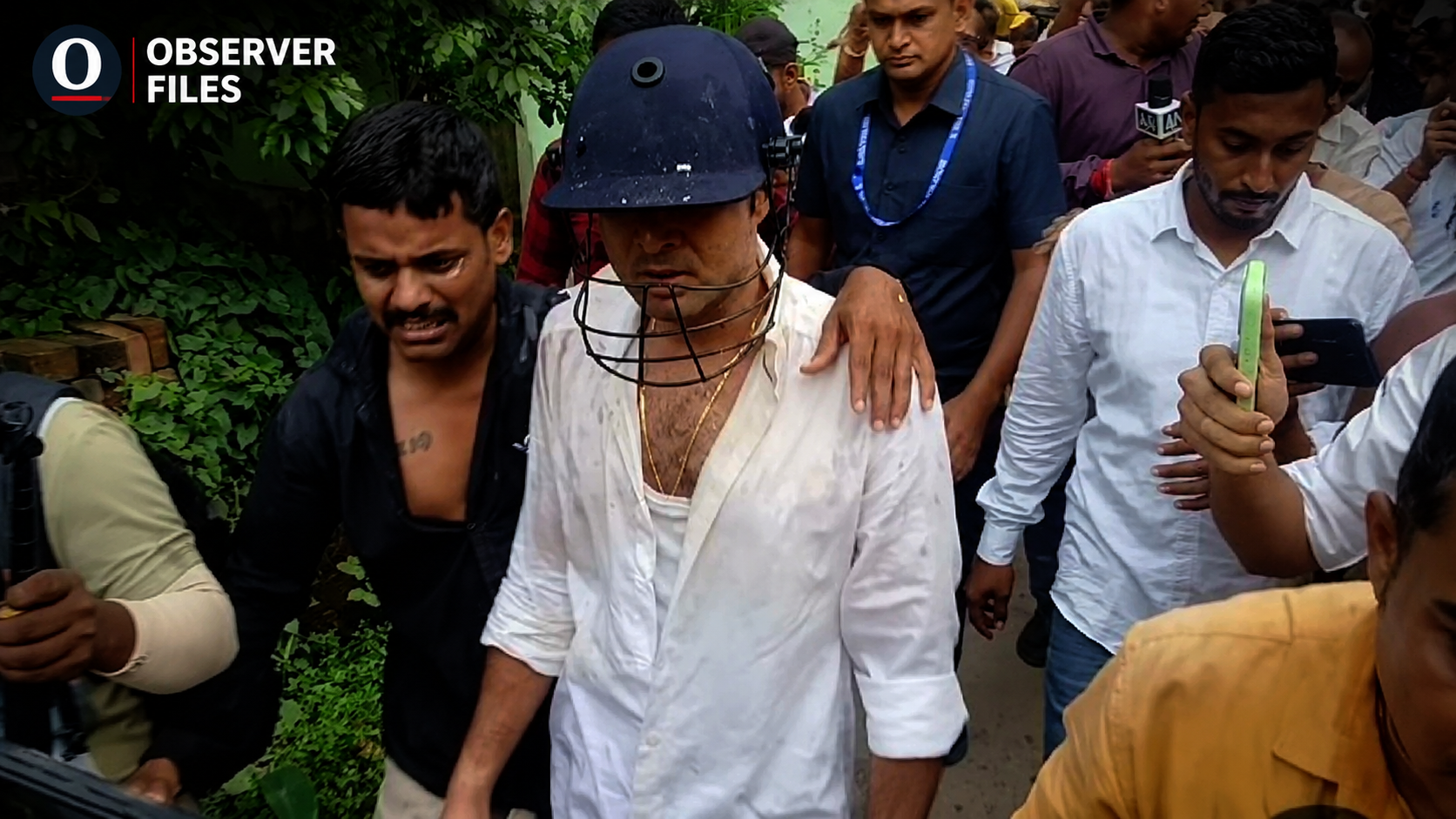
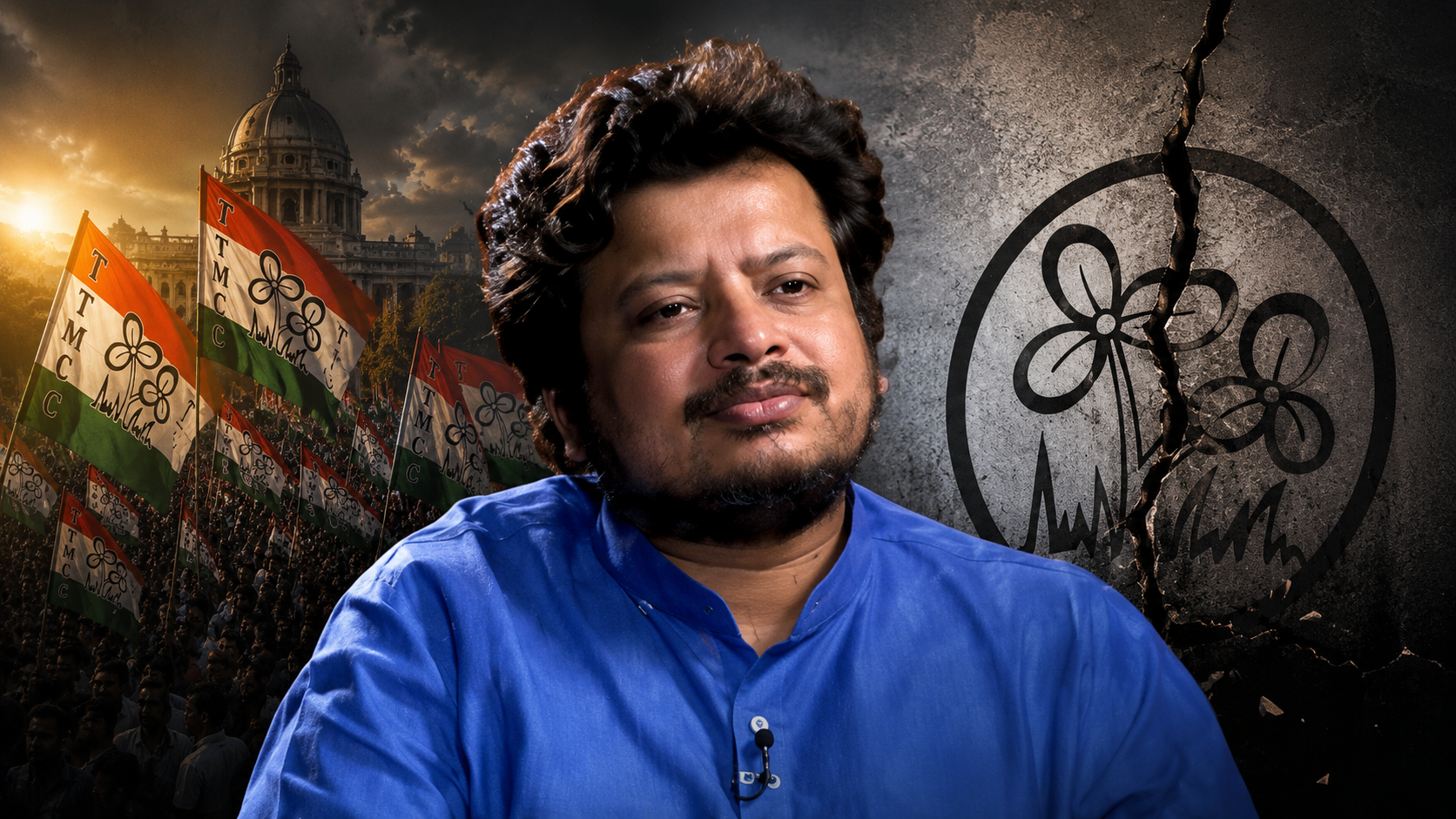
Two days ago, Ritabrata Banerjee was an expelled MLA — thrown out of the Trinamool Congress on June 1 for what the party called anti-party activities. Today, he is the recognised Leader of Opposition in the West Bengal Legislative Assembly, backed by 58 of TMC’s 80 MLAs, and the man who has delivered the most significant internal shock to Mamata Banerjee’s party in its 28-year history.
So who exactly is Ritabrata Banerjee — and how did a politician described as a non-conventional mass leader end up leading Bengal’s biggest political rebellion in a generation?
Early Life and the Left Years
Born on November 15, 1978, in Calcutta, Ritabrata Banerjee’s political roots lie not in TMC but in the Left. He was once considered one of the young faces of the Left in West Bengal.
He studied at Asutosh College before completing his MA at the University of Calcutta. His student politics were firmly in the Left camp. He served as General Secretary of the Students’ Federation of India, the CPI(M)’s student wing, from September 2008 to January 2016. It was a position that placed him among the most prominent young faces of Left student politics in Bengal during a period when the Left Front was still in power.
His rise within the CPI(M) was steady and significant. He was elected a Rajya Sabha member from West Bengal in February 2014 — representing the CPI(M) in Parliament at a time when the party was in opposition both in Bengal and at the Centre.
The CPI(M) Expulsion: A Pattern Emerges
His career within the CPI(M) came to an abrupt end in 2017 when he was expelled for anti-party activities. The specific trigger: Ritabrata was expelled by the CPI(M) after an interview to ABP Ananda television channel in which he spoke against Mohammed Salim — a senior CPI(M) leader.
It is the first time in his political career that Ritabrata Banerjee was expelled from a party for speaking publicly against the established leadership. It would not be the last.
The pattern — principled dissenter or habitual rebel, depending on your perspective — would define his career. After parting ways with the CPI(M), Banerjee joined the Trinamool Congress in 2020.
The TMC Years: Rise, Rajya Sabha, and Growing Discontent
His entry into TMC was rewarded relatively quickly. He served as State President of the Indian National Trinamool Trade Union Congress (INTTUC) West Bengal from November 2020 to June 1, 2026 — giving him influence over the party’s labour wing and its extensive network of trade union workers across the state.
In December 2024, TMC sent him back to Parliament. TMC named Ritabrata Banerjee as its candidate for the December 20 Rajya Sabha bypolls — a bypoll necessitated after the resignation of Jawhar Sircar as TMC’s Rajya Sabha MP in September following the RG Kar rape-murder incident and subsequent protests. He served as Member of Parliament in the Rajya Sabha from December 13, 2024 to April 2, 2026.
Then came the 2026 assembly elections. TMC was routed. Dissatisfaction had reportedly been brewing among several legislators who felt increasingly excluded from the decision-making process. Despite the party’s collapse, Ritabrata Banerjee won his own seat — he is the current MLA from the Uluberia Purba Assembly constituency, having assumed office on May 4, 2026.
The Expulsion That Backfired
The crisis came to a head almost immediately after the election results. The current crisis has its roots in growing disagreements within the Trinamool Congress over organisational functioning and political strategy following the party’s setbacks in the 2026 Assembly elections.
The decision to expel Ritabrata Banerjee and Sandipan Saha was intended to reinforce party discipline. Instead, it exposed the depth of discontent within the organisation.
On June 1, 2026, the Trinamool Congress expelled Banerjee and Saha from the party’s primary membership, accusing them of anti-party activities. The specific allegation: that the rebel duo had forged signatures on a proposal related to the appointment of the Leader of Opposition.
What happened next surprised even seasoned Bengal watchers. Within days, Banerjee emerged as a rallying point for a significant section of MLAs who were unhappy with the existing leadership structure.
June 3: The Rebellion Goes Public
On June 3, just 48 hours after his expulsion, 58 dissident TMC legislators seized control of the party’s legislature wing, elected Ritabrata as their leader, and secured recognition from West Bengal Assembly Speaker Rathindra Bose — marking the first split in the party’s 28-year history.
Standing before cameras after meeting the Speaker, Ritabrata was direct about what — and who — the rebellion was really about. He declared that party MP Abhishek Banerjee would have “absolutely no role” in the legislature wing now controlled by rebel MLAs.
“Abhishek Banerjee will have absolutely no role in it. Neither our legislative party nor the party organisation has any connection whatsoever with him. Nor does the public have any connection with him,” he said.
It was one of the most pointed public statements made against Abhishek Banerjee — Mamata’s nephew and long-assumed political heir — by any senior figure within TMC.
What Kind of Politician Is Ritabrata Banerjee?
Ritabrata Banerjee has never been regarded as a conventional mass leader. He is not a street-level politician in the TMC mould — not someone who built political capital through rallies, constituency work, or the kind of grassroots mobilisation that defines Bengal’s dominant political culture.
He is, instead, an organisational politician. His base was always institutional — student unions, trade unions, parliamentary positions. His strength lies in networks and negotiation rather than crowds and charisma.
That makes his emergence as the face of a 58-MLA rebellion all the more striking. He did not lead this movement through personal popularity. He led it because he was willing to say publicly what dozens of MLAs were thinking privately — that the party’s direction under Abhishek Banerjee and I-PAC was unacceptable, and that someone needed to take the first step.
He took it. Twice expelled, twice the outsider — once from the Left, now from the TMC. Whether that makes him a principled dissenter or a serial rebel is the question Bengal’s political observers are now actively debating.
The Road Ahead
Ritabrata Banerjee is now the recognised Leader of Opposition in the West Bengal Assembly. He leads a faction of 58 MLAs — a two-thirds majority of TMC’s legislature party that legally protects them from disqualification under the anti-defection law.
But recognition in the assembly and control over the party are two very different things. The battle for TMC’s organisation, its cadre base, and most crucially its election symbol is only beginning. That fight will be determined not by the Speaker of the West Bengal Assembly but by the Election Commission of India — a longer, harder, more uncertain process.
What is certain is that Ritabrata Banerjee — the man expelled from the Left for speaking against a senior leader, expelled from TMC for the same reason, and now leading the opposition bench in Bengal’s assembly — is no longer a footnote in Bengal’s political story.
He is, for now, its most consequential actor.
Also read: The Crack in Mamata’s Wall: TMC’s First Split in 28 Years and What It Really Means
ObserverFile is an independent political news and analysis platform — News Beyond the Noise.Share