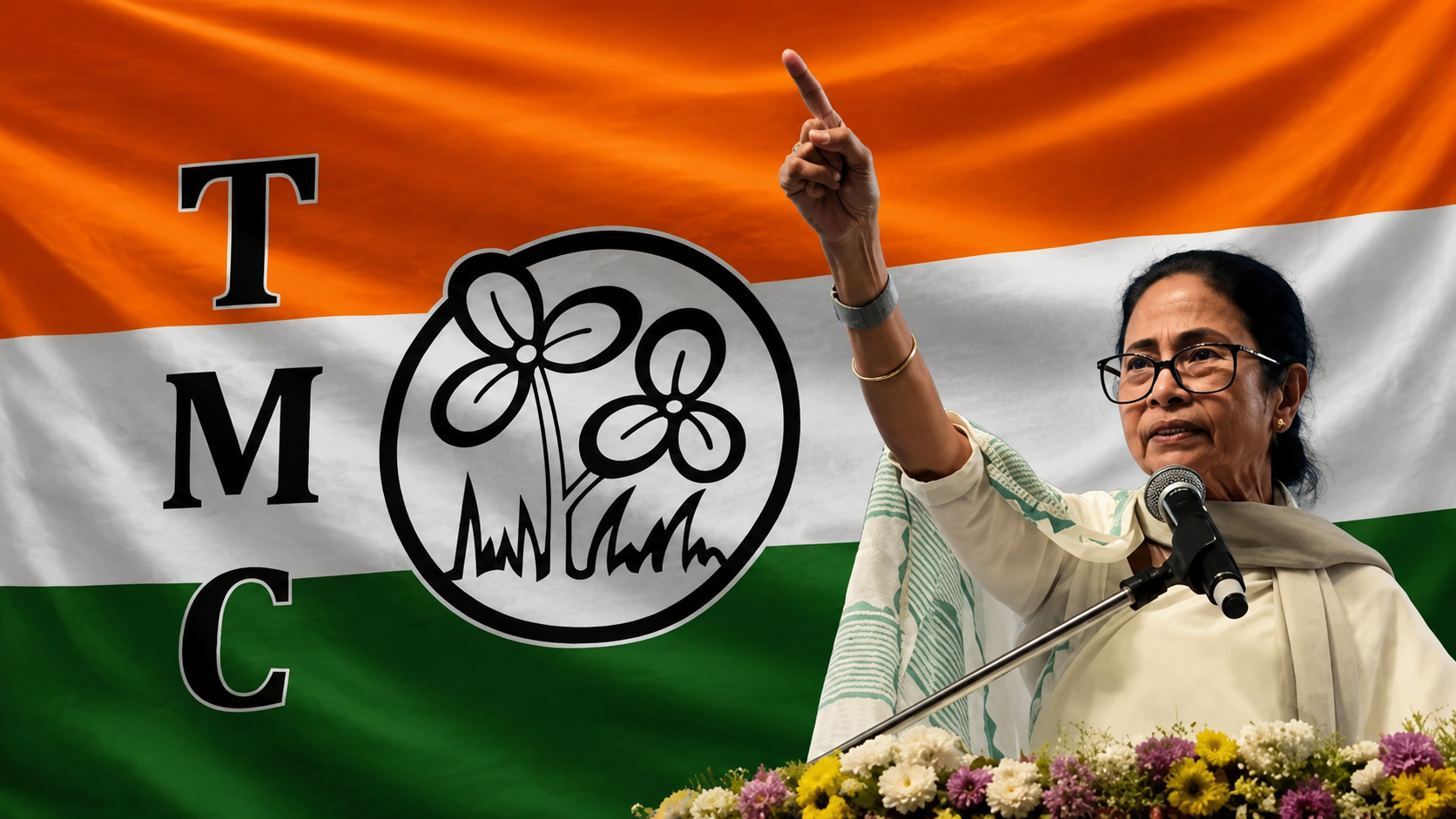
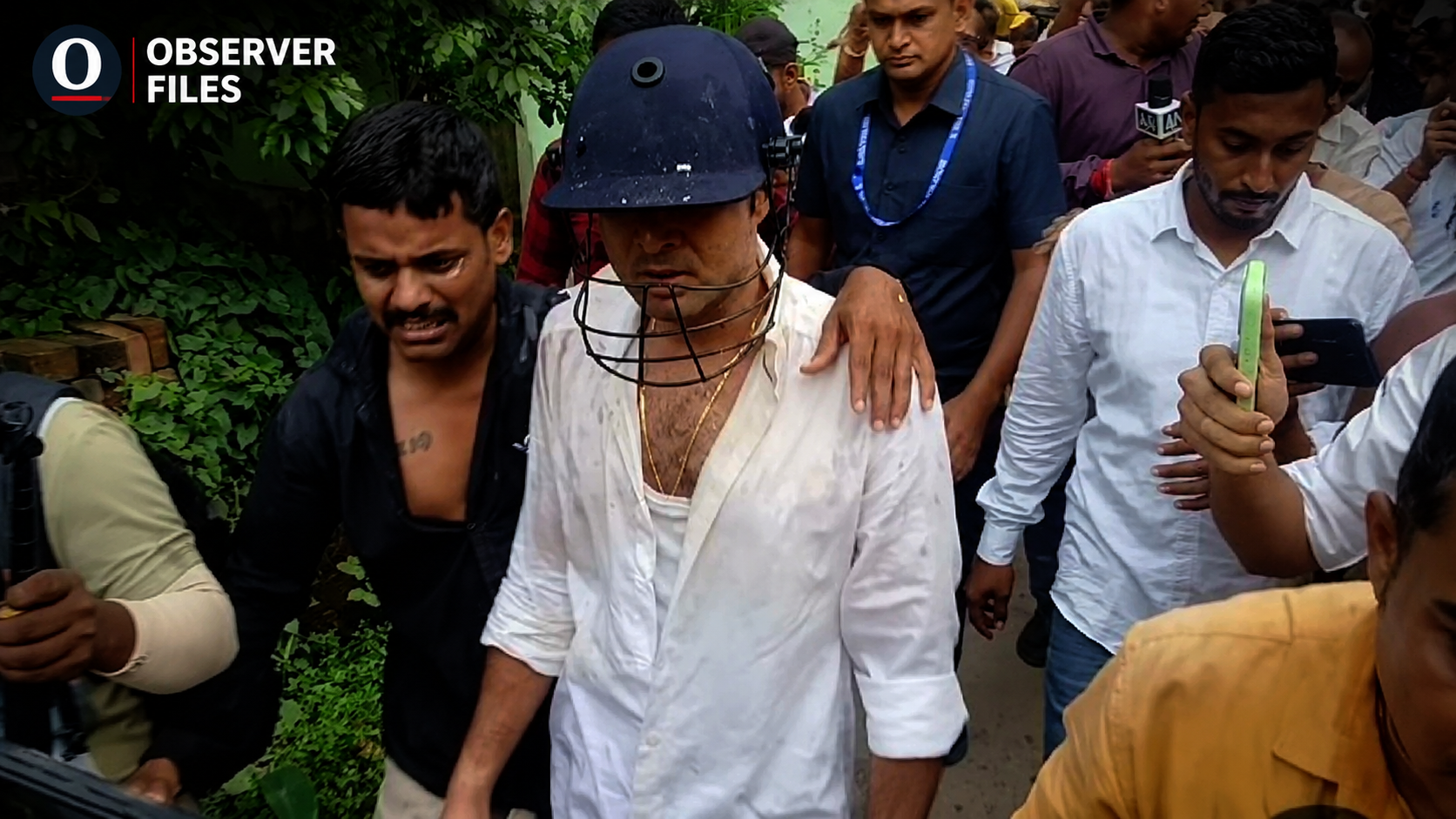
On the afternoon of May 30, 2026, Abhishek Banerjee — Trinamool Congress national general secretary, Lok Sabha MP from Diamond Harbour, and the man widely regarded as the number two in the TMC hierarchy — walked into Sonarpur in South 24 Parganas to visit families affected by post-poll violence. He left wearing a police helmet, his shirt torn, escorted out under a hail of stones, eggs, and shoes.
Five people have since been arrested. Two parties have traded furious accusations. And Bengal, barely three weeks into its first BJP government in history, is already back in familiar territory — political violence, blame games, and the question nobody seems to want to answer directly: why does this keep happening here?
What Happened in Sonarpur: The Facts
Abhishek Banerjee had gone to Sonarpur to meet the family of a TMC worker who was allegedly killed in post-poll violence following the BJP’s landslide victory in the May 2026 West Bengal assembly elections. It was a political visit, a show of solidarity from an opposition leader to his party’s ground-level workers.
What followed was anything but routine.
A crowd — identified by TMC as BJP workers — threw stones, eggs, and footwear at Banerjee. He was physically roughed up, his shirt visibly torn. People, including women, were seen shouting “chor chor” (thief) slogans and calling him a “Bangladeshi.” Police had to intervene and escort him out while he wore a helmet for protection.
Banerjee was unambiguous about what he believed had happened. “Look what they have done to me. This was pre-planned. There is no police in the area. They want to kill me,” he said, refusing to leave until local police arrived to offer protection to the victims’ families.
By May 31, five persons had been arrested in connection with the assault.
The Security Question Nobody Is Asking Loudly Enough
Here is where the story gets complicated — and more important than a simple attack-and-reaction narrative.
Barely days after the Suvendu Adhikari-led BJP government took oath on May 9, one of its first administrative actions was to strip Abhishek Banerjee of his Z-plus security cover. The state government withdrew his highest-tier protection, discontinued his special pilot car facility, and removed police deployment from his residences at Kalighat and his office on Camac Street.
The official reasoning? A fresh threat perception review. The new administration maintained that security would be rationalised based on actual threat assessments, and that Abhishek would receive only the standard security cover generally applicable to a Member of Parliament.
Three weeks later, Abhishek Banerjee walked into Sonarpur without adequate protection — and was attacked.
Senior TMC leader Derek O’Brien raised this connection directly, questioning the withdrawal of Abhishek’s security cover and demanding answers from the Union Home Ministry. “The Lok Sabha leader of the second largest opposition party went to visit the family of a person murdered by BJP in post-poll violence. He was lynched and attacked. Life at risk. Where are the police?” O’Brien posted on social media.
The BJP has rejected all allegations of involvement. Bengal BJP President Samik Bhattacharya suggested the attack may have been a result of public anger against the TMC — an explanation that, if accepted, raises its own disturbing questions about the state of law and order.
The Bigger Picture: Bengal’s Unbreakable Cycle of Political Violence
To understand Sonarpur on May 30, you need to understand what Bengal has been through for decades.
Post-poll violence is not new to West Bengal. It is, in fact, a grim ritual. After every major election result — 2011, 2016, 2021 — reports of violence, killings, and displacement of opposition workers have followed like clockwork. The party in power has always been accused of enabling it. The party in opposition has always claimed victimhood. Courts have intervened. Committees have been formed. Nothing has fundamentally changed.
In 2021, after TMC’s third consecutive victory, the scale of violence triggered a rare judicial intervention. The Calcutta High Court directed the National Human Rights Commission to constitute a fact-finding committee to probe alleged human rights violations. The NHRC’s report, submitted before a five-judge bench, was scathing enough that the High Court subsequently ordered a CBI probe into murders and rapes committed during the violence — an order the Mamata Banerjee government challenged all the way to the Supreme Court.
Multiple deaths were reported within days of the 2021 results. BJP workers alleged they were being targeted and displaced from their homes. Mamata Banerjee appealed for peace. The BJP held national protests.
Now, in 2026, the script has flipped — but the play is disturbingly the same. BJP has won. TMC workers allege they are being targeted. TMC leaders are visiting affected families. And in Sonarpur, the opposition’s number two man was attacked in broad daylight.
The uncomfortable truth is this: Bengal’s political culture has, for too long, treated violence as an instrument of political consolidation. Whoever wins normalises the muscular assertion of power. Whoever loses cries foul. And ordinary workers on both sides pay with their safety, their homes, and sometimes their lives.
What Mamata Said — And What She Didn’t
Mamata Banerjee’s response to the attack on her nephew was swift and sharp. “RULERS BECAME KILLERS — shame on you BJP,” she posted on X.
It is a powerful line. It is also, coming from her, deeply ironic.
For fifteen years, the BJP levelled nearly identical accusations at her government — that TMC cadres were attacking opposition workers, that the police was complicit, that the state machinery was being used to crush dissent. In 2021, the Supreme Court took cognisance of post-poll violence in Bengal and the National Human Rights Commission submitted a scathing report.
Mamata dismissed most of those allegations. Her government routinely denied police complicity. She accused the BJP of exaggerating and politicising law and order.
Today, she is using the exact same language her opponents used against her for over a decade.
This is not a point scored against TMC. It is an indictment of a political system where the language of victimhood is deployed selectively, where violence is condemned only when it is your own people facing it, and where accountability is demanded from power only when you are no longer in it.
The BJP Government’s First Test — And an Early Warning Sign
For the BJP, the Sonarpur incident is more than a political flashpoint. It is an early test of the kind of government Bengal is going to get.
The new administration came to power on a promise of law and order, an end to political violence, and accountability for the years of alleged TMC-sponsored intimidation. Chief Minister Suvendu Adhikari, who built his political capital partly on standing up to Mamata Banerjee’s machinery, now runs that machinery.
The first few weeks have already generated controversy — the withdrawal of Abhishek Banerjee’s security, the Bakrid holiday rollback, questions about post-poll violence against TMC workers. None of these, individually, is disqualifying. Governments make early decisions that create friction. That is normal.
But the attack on a sitting Member of Parliament in a state that just changed governments — and the fact that it happened in an area reportedly without adequate police presence — is a signal that demands a serious response, not just a political counter-attack.
If the Adhikari government is serious about its law and order credentials, it must ensure that opposition leaders can visit their constituents without being assaulted. If it believes the arrests made so far are sufficient, it must explain why the security vacuum existed in the first place.
The alternative is a Bengal where the cycle continues — just with different perpetrators and different victims.
What This Moment Demands
Five people have been arrested. That is the legal process doing its minimum. It is not justice, and it is not accountability.
What this moment actually demands is harder:
The BJP government must publicly commit to protecting opposition leaders’ safety — including those it stripped of security — regardless of political affiliation. An opposition that cannot function safely is not an opposition. It is a threat waiting to materialise.
The TMC must reckon honestly with its own record. Condemning violence loudly in opposition while having enabled it in power is not a moral position. It is a political convenience.
And Bengal’s citizens — who voted in enormous numbers for change — must hold both sides to a higher standard than the one they have accepted for the last three decades.
Sonarpur on May 30 was not just an attack on Abhishek Banerjee. It was a reminder that changing the government does not automatically change the culture. That work is harder, slower, and far less dramatic than a single election victory.
Bengal has changed its rulers. Whether it changes its politics remains the real question.
ObserverFile is an independent political news and analysis platform. Follow us for in-depth coverage of Bengal and national politics — News Beyond the Noise.