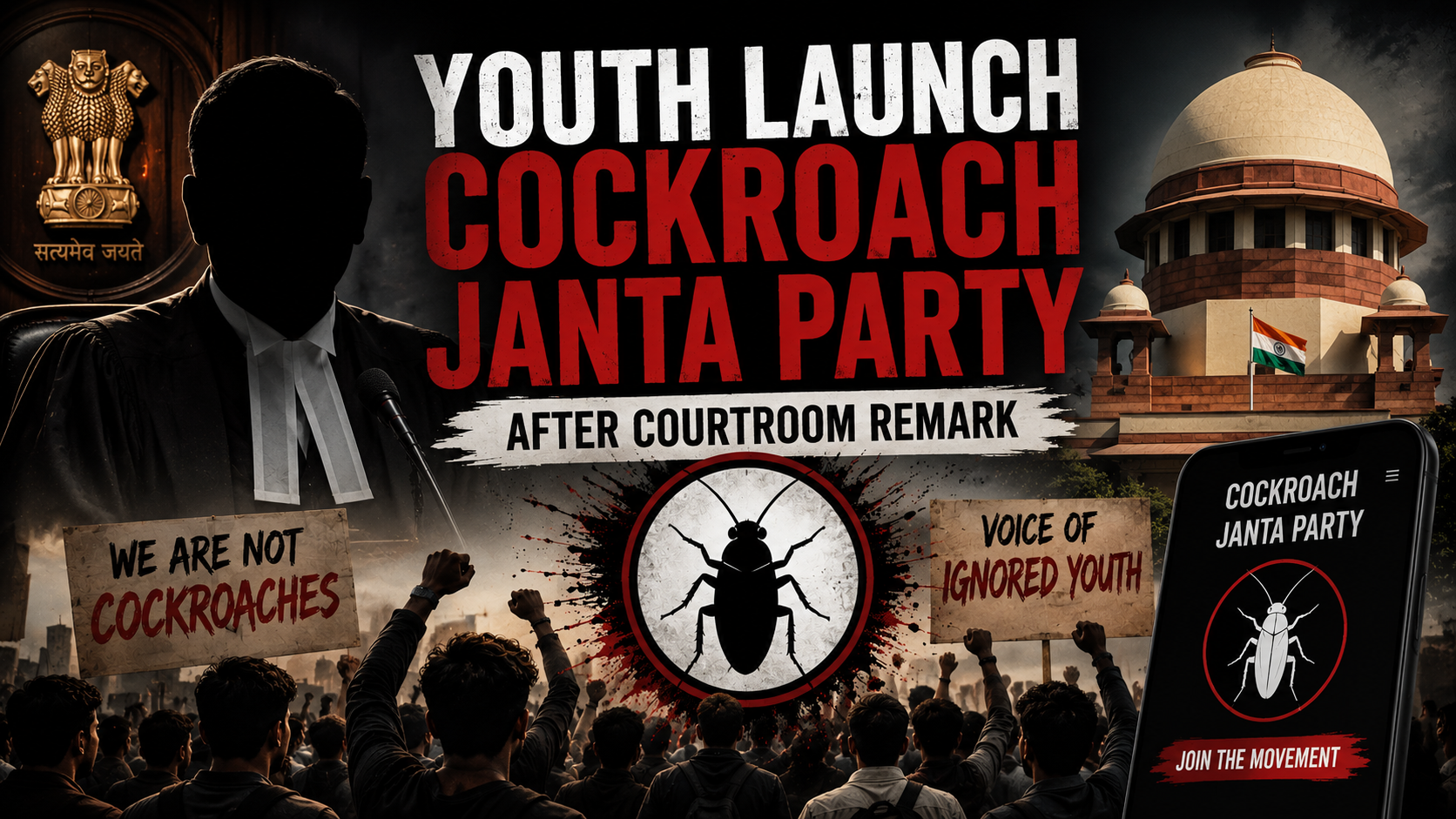
The internet in India has found its newest political symbol — a cockroach.
What started as outrage over a controversial courtroom remark has now transformed into a full-fledged viral movement called the “Cockroach Janta Party” (CJP), complete with its own website, social media campaign, satirical political messaging, and symbolic black cockroach logo.
The movement emerged after comments made by Chief Justice Surya Kant during a court hearing sparked intense debate online. Within hours, memes, parody posters, hashtags, and political satire flooded social media platforms, eventually leading to the launch of the website cockroachjantaparty.org.
How the Controversy Began
The controversy started during a courtroom hearing involving allegations related to fake qualifications and fraudulent educational claims.
During the proceedings, Chief Justice Surya Kant criticized certain individuals allegedly exploiting the system through fake credentials and social media activism. In one part of the exchange, he reportedly used the term “cockroaches” while referring to people misusing the system.
Although the judge later clarified that his remarks were directed specifically toward individuals involved in fraudulent activities — not ordinary unemployed youth — the clarification came after clips from the hearing had already gone viral across X, Instagram, Reddit, and YouTube.
Many social media users interpreted the comments as insulting toward an entire generation already frustrated by unemployment, examination scandals, delayed recruitments, and economic uncertainty.
That emotional reaction quickly became fuel for internet satire.
Birth of the Cockroach Janta Party
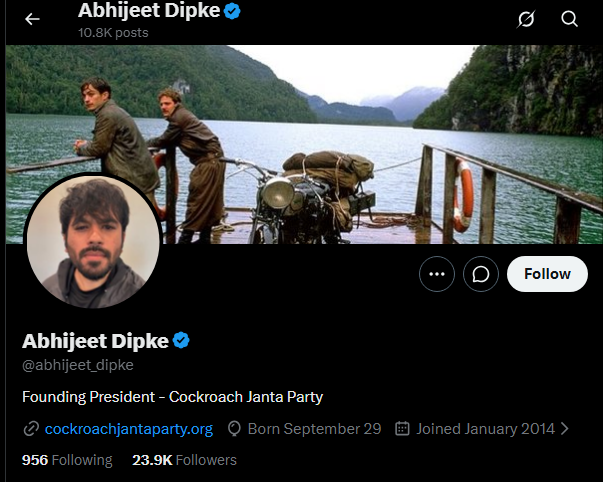
Soon after the controversy exploded online, political commentator Abhijeet Dipke announced the formation of the “Cockroach Janta Party.”
The movement embraced the controversial label instead of rejecting it.
Its official website presents the organization almost like a real political campaign. Visitors are greeted with:
- satirical slogans,
- mock political messaging,
- campaign-style visuals,
- and symbolic references to youth frustration.
The black cockroach logo soon became the defining symbol of the movement.
While the party clearly operates with heavy satire and meme culture, the anger behind the humor appears very real for many supporters online.
Cockroach Janta Party: Why the Movement Went Viral
The rise of the Cockroach Janta Party reflects much more than a simple meme trend.
India’s youth are already dealing with growing frustration over:
- paper leak scandals,
- delayed examinations,
- recruitment controversies,
- unemployment,
- and uncertainty about the future.
Recent controversies involving competitive exams have deeply affected public trust among students and job aspirants.
When the courtroom remarks surfaced online, many users connected them emotionally to those larger frustrations.
The result was immediate.
Within hours:
- memes flooded social media,
- AI-generated posters appeared online,
- parody speeches circulated,
- and users began using cockroach imagery as a symbol of protest against what they describe as an insensitive system.
The movement gained even more attention after several well-known political figures indirectly acknowledged the trend online. Trinamool Congress MP Mahua Moitra and senior politician Kirti Azad were among the prominent names whose reactions and playful references to the controversy further amplified the movement across social media.
Their engagement gave the “Cockroach Janta Party” trend additional visibility beyond meme circles and helped push it deeper into mainstream political conversation. Many internet users viewed this as a sign that what began as satire was now evolving into a wider commentary on youth frustration, unemployment, and public anger toward institutions.
The Role of Meme Culture in Modern Politics
The Cockroach Janta Party also demonstrates how rapidly political communication is changing in India.
Today, internet-driven satire often spreads faster than traditional political campaigns.
Instead of relying on:
- rallies,
- speeches,
- or television debates,
modern political messaging increasingly travels through: - memes,
- reels,
- parody videos,
- hashtags,
- and viral internet culture.
For younger audiences especially, humor has become a form of political expression.
The Cockroach Janta Party understands this perfectly. Its creators turned outrage into instantly shareable internet content, making the movement spread organically across platforms.
Satire With a Serious Message
Although the movement presents itself humorously, the themes it touches on are serious.
Many supporters online argue that the campaign reflects deeper public frustration toward:
- institutional arrogance,
- unemployment,
- exam irregularities,
- and political disconnect.
The movement’s messaging repeatedly portrays unemployed youth as ignored, mocked, or misunderstood by those in positions of authority.
That emotional connection is one reason the campaign gained traction so quickly.
Even people who do not support the movement politically often admit that it captured a growing mood of dissatisfaction among digitally active young Indians.
Critics Say the Remarks Were Misinterpreted
Not everyone agrees with the backlash.
Supporters of the judiciary and several commentators argued that the judge’s original statement was taken out of context.
According to them, the remarks targeted people involved in fraudulent educational practices rather than unemployed youth in general.
They accuse online activists of deliberately distorting the comments for political outrage and viral engagement.
However, by the time clarifications emerged, social media had already established its own narrative.
That highlights one of the defining realities of modern internet politics:
viral perception often moves faster than official explanation.
The Website Behind the Viral Movement
The official website, cockroachjantaparty.org, plays a major role in the movement’s popularity.
The platform combines:
- dark humor,
- anti-establishment messaging,
- internet satire,
- and political parody.
Some sections mock:
- bureaucracy,
- political privilege,
- institutional hypocrisy,
- and examination scandals.
The site is designed almost like a parody election campaign, blurring the line between meme culture and political activism.
That ambiguity is precisely what makes it so effective online.
Internet Politics in India Is Changing
The rise of the Cockroach Janta Party reveals how political expression among younger Indians is evolving rapidly.
Digital protest movements today no longer need:
- physical rallies,
- major funding,
- or traditional media support.
A viral slogan, a recognizable symbol, and emotional internet momentum can now create nationwide attention within hours.
The movement also shows how humor has become one of the most powerful political tools online.
What begins as satire can quickly evolve into a broader expression of social frustration.
Conclusion
The Cockroach Janta Party may ultimately remain a temporary internet phenomenon, but the emotions driving it are very real.
Behind the memes, parody logos, and sarcastic slogans lies a generation increasingly frustrated with:
- unemployment,
- institutional failures,
- exam controversies,
- and political disconnect.
Whether the movement survives beyond social media trends remains uncertain.
But one thing is clear: in modern India, even a courtroom remark can become the spark for a nationwide internet rebellion.