When stones and eggs rained down on Abhishek Banerjee’s convoy in Sonarpur on May 30, 2026, many in national media treated it as a shocking aberration — a dramatic first act of political aggression against Bengal’s new opposition leader.
It was not a first. Not even close.
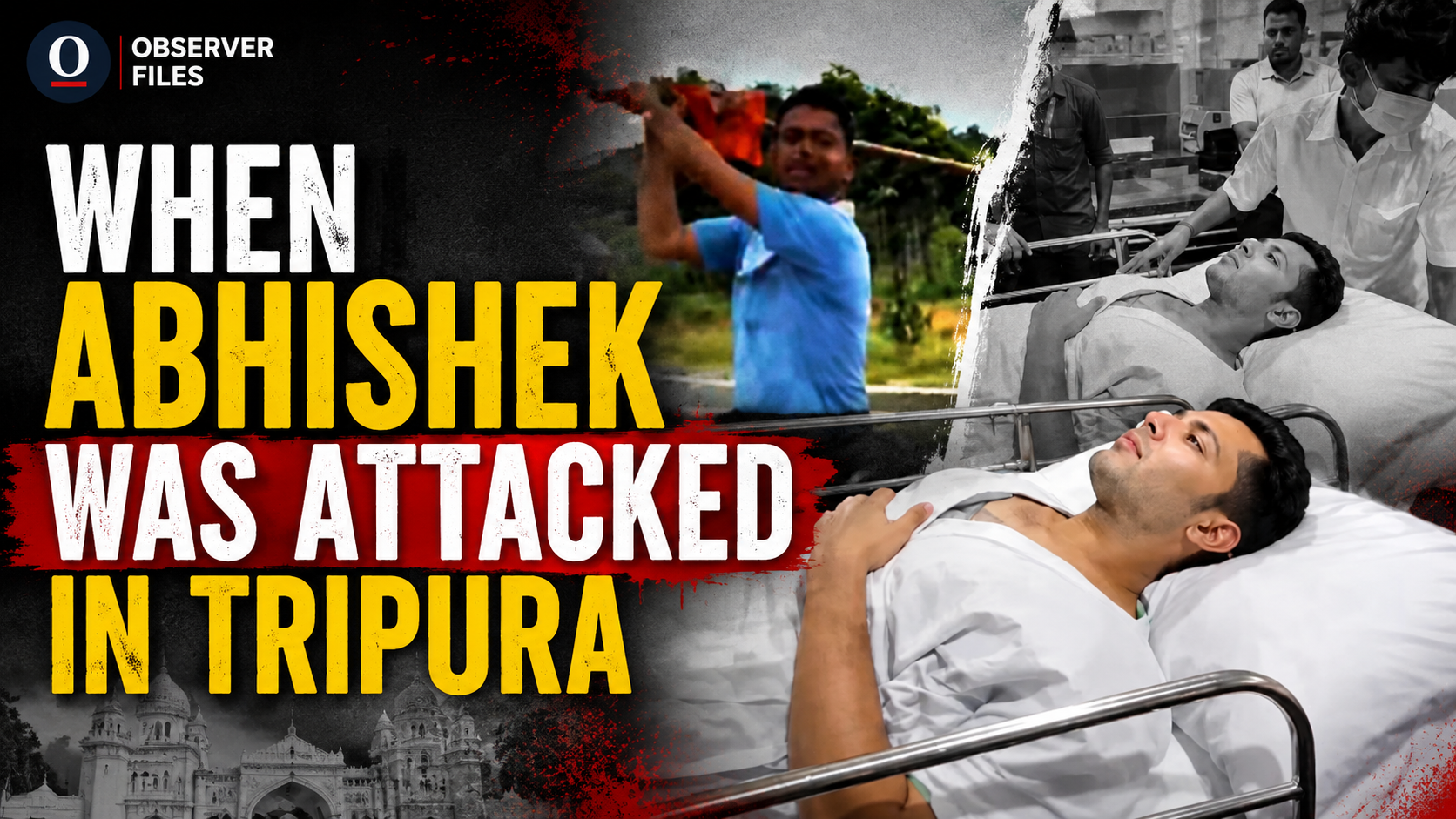
Five years before Sonarpur, on August 2, 2021, Abhishek Banerjee’s convoy was attacked in Tripura — also by workers carrying BJP flags, also in broad daylight, also while he was on a political visit. The tactics were nearly identical. The response from both parties was nearly identical. And the outcome — political noise, a few arrests, no systemic accountability — was also nearly identical.

If Sonarpur in 2026 feels familiar, that is because it is. The attack on India’s second most prominent opposition leader has happened before. Understanding that history is essential to understanding what is happening now.
What Happened in Tripura: August 2, 2021
In the summer of 2021, TMC was attempting something ambitious — expanding beyond West Bengal into BJP-ruled states ahead of the 2023 Tripura assembly elections. Abhishek Banerjee, as the party’s national general secretary and its most visible face after Mamata, was leading that expansion personally.
On August 2, he arrived in Agartala and set out toward the Tripureshwari temple in Udaipur to offer prayers. What followed was a series of coordinated disruptions along the route.
BJP workers tried to stop Banerjee’s convoy multiple times on the way to the Tripureshwari temple from the Agartala airport. His convoy was first stopped at Charilam in West Tripura district as protesting BJP workers raised slogans and tried to block the road. BJP workers also allegedly hit Banerjee’s car with the batons of their party flag.
The situation escalated further along the route. A video shared by Abhishek showed that the windscreen of his vehicle developed a crack after it was hit by a BJP supporter with a stick. Abhishek later claimed that three of his security personnel received serious injuries in the attack.
A group of BJP workers also tried to stop the convoy at Kamalasagar in the Sipahijala district, raising slogans against Banerjee. As he reached the Tripureshwari temple in Udaipur, another group of BJP workers tried to block his way raising “Go back Abhishek” slogans.
Banerjee shared a video of the attack on social media and tagged then Tripura Chief Minister Biplab Deb directly. “Democracy in Tripura under BJP rule. Well done Biplab Deb for taking the state to new heights,” he wrote.
The Violence Did Not Stop There
The Tripura attacks were not a single incident. They were a sustained pattern over several days and visits.
At least 12 TMC leaders and workers, including those injured in an alleged attack by BJP workers, were arrested in Tripura’s Khowai district for “violating Covid norms.” TMC leaders including Debangshu Bhattacharya, Tania Poddar, Sudip Raha and Jaya Dutta were among those arrested. Raha and Dutta had sustained injuries when their vehicle was allegedly attacked by BJP workers at Ambassa in Dhalai district.
The arrests on Covid grounds — made hours after the attack on TMC workers — were widely condemned as politically motivated. TMC alleged that the Tripura government was using pandemic restrictions selectively to detain opposition workers who had just been attacked.
West Bengal Chief Minister Mamata Banerjee accused Union Home Minister Amit Shah of orchestrating the attacks, saying that Tripura Chief Minister Biplab Deb would not dare to order such an attack without Shah’s active involvement. She further alleged that the car carrying TMC youth leaders Jaya Dutta, Debangshu Bhattacharya and Sudip Raha was not only pelted with stones and its windshield smashed, but that shots were also fired at it. She said Raha sustained a serious head injury while Dutta was hit in the face with shrapnel.
The BJP denied all allegations of orchestration and blamed TMC for provoking the situation.
Watch: CNN-News18’s Coverage of the Tripura Attack
The Pattern: Five Years, Three Attacks, One Name
The Tripura attack in 2021 was not the last time Abhishek Banerjee’s convoy would come under attack outside Bengal either.
In May 2023, his convoy was attacked again — this time in Jhargram, West Bengal itself, during a roadshow. Stones were hurled at Banerjee’s convoy as they were travelling to Gajimul near Lodhasuli after leading a roadshow in Jhargram town. Glass particles from the shattered windscreen hit state minister Birbaha Hansda, and also injured her driver. Some cars and motorcycles following them were also vandalised in the stone-pelting.
And then came Sonarpur on May 30, 2026 — the most serious incident yet, in which Banerjee himself was physically roughed up, his shirt torn, and he had to be escorted out wearing a police helmet.
Three attacks across five years. Different states, different political contexts, different perpetrators alleged. But the same target, every time.
What The Pattern Actually Reveals
Taken together, these incidents reveal something more uncomfortable than simple political violence. They reveal a consistent strategic logic: that attacking Abhishek Banerjee physically — or attempting to — serves a political purpose for whoever is in power in the state he is visiting.
In Tripura in 2021, the BJP was trying to signal to TMC that it would not be allowed to expand eastward without cost. The attacks were a territorial warning — stay in Bengal, this is not your ground.
In Jhargram in 2023, the political context was murkier — the accused were allegedly dressed as Kurmi community protesters — but the target and timing, during a TMC roadshow, pointed to deliberate disruption.
In Sonarpur in 2026, the context has flipped entirely. Now BJP rules Bengal. Now TMC is the opposition. And now Abhishek Banerjee, stripped of his Z-plus security cover by the new state government, walks into a post-poll violence hotspot and is attacked by a crowd identified by his party as BJP workers.
The political jersey changes. The violence does not.
The Unanswered Question About Security
Each of these attacks raises the same question that has never been adequately answered.Why is a sitting Member of Parliament, the national general secretary of a major national party, repeatedly placed in situations where he can be physically attacked?
In 2021 in Tripura, the state police — under BJP rule — was present during some of the incidents but did not prevent them. TMC alleged the police watched and allowed the attacks to happen.
In 2026 in Sonarpur, the Bengal police was reportedly absent from the area when the attack occurred, weeks after the new BJP state government withdrew Banerjee’s Z-plus security cover.
The question is not partisan. It is institutional. A democracy that cannot protect its opposition leaders from physical violence — regardless of which party those leaders belong to — is a democracy with a serious structural problem.
Tripura Then, Bengal Now: The Irony Is Inescapable
There is a painful irony in how this history has unfolded.
In 2021, when Abhishek Banerjee was attacked in Tripura, the TMC was vocal in condemning BJP’s culture of political violence. Mamata Banerjee personally accused Amit Shah of orchestrating the attacks. TMC demanded accountability from the BJP government in Tripura.
Mamata Banerjee accused the BJP of beating up political opponents if they dare to take out rallies in Tripura, saying that whoever dares to oppose the BJP is hit with sticks, and that they do not even allow injured workers to be treated at a hospital.
Five years later, Mamata is using near-identical language about Bengal under BJP rule.
And five years from now, if history holds its pattern, someone else will be saying the same things about whoever rules Bengal next.
That is the real story of Sonarpur. Not who attacked whom. But why Bengal keeps producing the same story, election after election, with only the names and party colours swapped out.
Conclusion: Break the Pattern or Repeat It
Abhishek Banerjee has survived three convoy attacks. He will probably survive more, given the trajectory of Bengali political culture.
But survival is not the standard a democracy should settle for.
The BJP government in Bengal has an opportunity — and an obligation — to demonstrate that it is serious about the law and order promises it made to voters. That means protecting opposition leaders actively, not just arresting attackers after the fact. It means restoring adequate security to the Leader of the Opposition in a state with a documented history of political violence. It means sending a clear institutional signal that attacking political opponents will not be tolerated, regardless of which party the attacker belongs to.
If it fails to do this, the Sonarpur attack will not be the last entry in Abhishek Banerjee’s file of convoy attacks. And Bengal will have changed its government without changing anything that actually matters.