
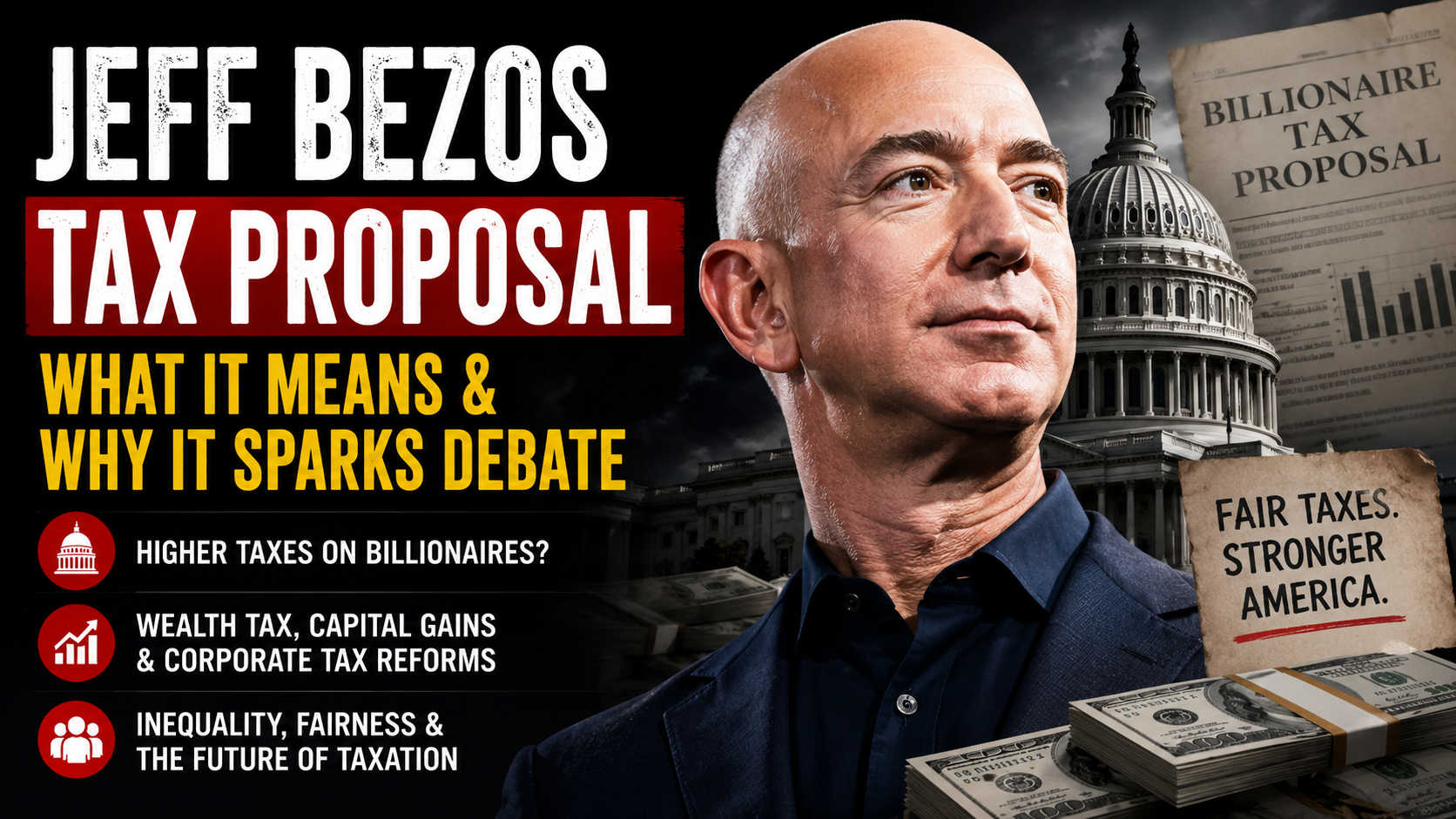
The debate around billionaire taxation has once again brought Jeff Bezos into the spotlight. “Jeff Bezos tax proposal” has surged online as renewed discussions over billionaire taxation, wealth inequality, and corporate taxation continue dominating political and economic debates in the United States.
The debate surrounding Jeff Bezos has intensified amid growing calls for higher taxes on billionaires and ultra-wealthy individuals. Lawmakers, economists, and activists have repeatedly pointed to Bezos as a symbol of America’s widening wealth gap and the broader debate over how much tax billionaires should pay.
Why Jeff Bezos Is at the Center of the Tax Debate
Jeff Bezos, founder of Amazon, has long been a central figure in conversations around wealth taxation because of his enormous net worth and influence in the global economy.
Critics argue that billionaires often pay proportionally lower taxes compared to middle-class earners due to:
- capital gains structures,
- stock-based wealth,
- tax deductions,
- and investment loopholes.
Supporters of tax reform say the existing system allows ultra-wealthy individuals to accumulate massive fortunes while paying relatively limited income tax.
The debate intensified after several reports over the years suggested that some billionaires legally paid extremely low federal income taxes during certain periods.
What Is the “Jeff Bezos Tax Proposal”?
The phrase “Jeff Bezos tax proposal” is often used online to describe broader proposals targeting billionaire wealth rather than a proposal personally introduced by Bezos himself.
These discussions usually involve:
- billionaire wealth taxes,
- unrealized capital gains taxes,
- higher corporate taxes,
- minimum billionaire tax structures,
- or inheritance tax reforms.
Several U.S. lawmakers have proposed systems where ultra-wealthy individuals would be taxed not only on salary income but also on the rising value of assets such as:
- stocks,
- company ownership,
- investments,
- and property holdings.
Because much of Bezos’s wealth comes from Amazon shares, he frequently becomes one of the main examples used during these debates.
Supporters Say Billionaires Should Pay More
Supporters of wealth taxation argue that the current tax system disproportionately benefits billionaires.
They claim:
- billionaires accumulate wealth faster than ordinary workers,
- stock appreciation creates enormous untaxed gains,
- and loopholes allow wealthy individuals to minimize taxable income.
Many progressive politicians and activists argue that taxing billionaires more aggressively could help fund:
- healthcare,
- education,
- climate programs,
- infrastructure,
- and social welfare systems.
Some economists also argue that extreme wealth concentration can create long-term economic imbalance and political influence concerns.
Critics Warn About Economic Consequences
Opponents of aggressive billionaire taxes argue that such policies could:
- discourage investment,
- reduce innovation,
- hurt entrepreneurship,
- and negatively impact financial markets.
Critics also argue that taxing unrealized gains creates practical challenges because stock values constantly fluctuate.
Business groups and free-market advocates often claim that entrepreneurs like Bezos:
- create jobs,
- drive technological advancement,
- and contribute significantly to economic growth.
They argue that excessive taxation could damage investment confidence and economic competitiveness.
Jeff Bezos Tax Proposal: The Broader Political Battle Over Wealth
The Bezos tax debate has become part of a much larger political conflict over:
- wealth inequality,
- capitalism,
- corporate influence,
- and economic fairness.
In recent years, rising inflation and growing frustration over income inequality have intensified public anger toward billionaires and major corporations.
Social media has amplified these debates dramatically, with billionaire wealth often becoming a symbol of broader frustrations surrounding:
- housing costs,
- healthcare expenses,
- wages,
- and economic opportunity.
Amazon’s Role in the Debate
Amazon itself frequently becomes part of the discussion because of:
- its market dominance,
- labor controversies,
- warehouse conditions,
- and corporate tax policies.
Critics have repeatedly accused major corporations of using:
- deductions,
- international structures,
- and tax incentives
to reduce corporate tax burdens.
Meanwhile, supporters of Amazon argue the company has:
- transformed global commerce,
- created massive employment,
- and revolutionized logistics and cloud computing.
Why the Topic Trends So Frequently Online
Searches related to “Jeff Bezos tax proposal” often surge during:
- election cycles,
- budget debates,
- congressional hearings,
- billionaire rankings,
- or major political speeches.
The topic consistently trends because it combines:
- politics,
- economics,
- celebrity-level public attention,
- and social inequality debates.
Bezos’s status as one of the world’s wealthiest individuals makes him a recurring symbol in discussions about modern capitalism.
Billionaire Taxes Becoming a Global Debate
The debate is no longer limited to the United States.
Several countries and international organizations have explored:
- global minimum taxes,
- wealth taxes,
- and coordinated billionaire taxation systems.
Supporters argue international coordination is necessary because ultra-wealthy individuals can often move assets globally.
Critics warn such systems could:
- reduce competitiveness,
- increase capital flight,
- and create enforcement complications.
Public Opinion Remains Divided
Polls in many countries show strong public support for higher taxes on billionaires, especially during periods of economic hardship.
However, opinion remains sharply divided depending on:
- political ideology,
- economic philosophy,
- and views on capitalism.
For some, billionaires represent innovation and economic success.
For others, they symbolize growing inequality and concentration of power.
Conclusion
The “Jeff Bezos tax proposal” debate reflects a much larger global conversation about wealth, fairness, and the future of modern capitalism.
While Jeff Bezos himself may not have proposed such taxes, his enormous wealth and public profile have made him one of the central figures in discussions surrounding billionaire taxation.
As governments worldwide continue debating how to balance:
- economic growth,
- innovation,
- and wealth inequality,
the political and economic arguments surrounding billionaire taxes are likely to remain highly controversial for years to come.